
Skip to content
NSW Coat of Arms
Marine Parks Authority NSW
  1. Home
  2. Marine Parks Regulation 2009
Contact Print this page Reduce font size Increase font size

Marine Parks Regulation 2009

The Marine Parks Regulation 2009 commenced on 31 August 2009.

The Marine Parks (Zoning Plans) Regulation 1999, which contains the zoning plans for marine parks, was established at the end of 31 August 2009. The amendments that established the Marine Parks (Zoning Plans) Regulation 1999 were contained in Schedule 2 of the Marine Parks Regulation 2009.

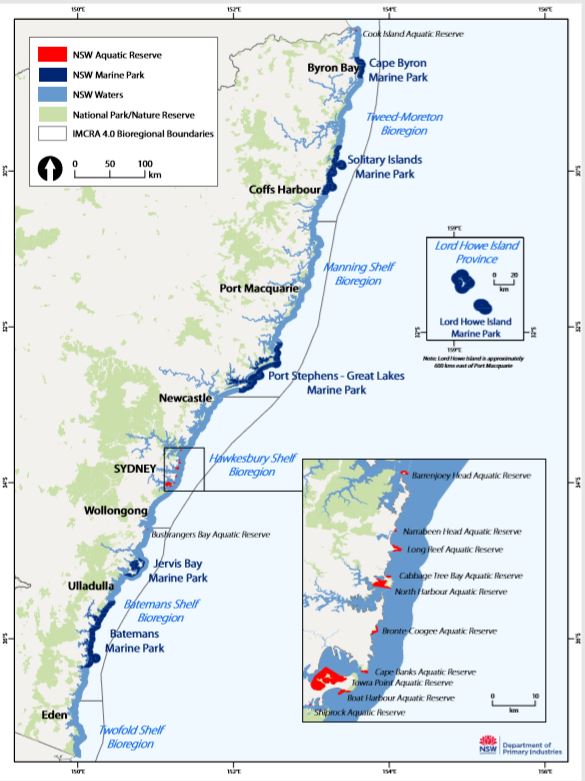
Marine park zoning plans are now subject to statutory review and amendment processes under the Marine Parks Act 1997. Consequently, no changes to the substance of any zoning plan were made by the Marine Parks Regulation 2009. Zoning plan reviews for Jervis Bay and Solitary Islands marine parks commenced in 2008 and remain in progress. If changes to zoning plans are required as an outcome of the current reviews, these will be the subject of separate three month public exhibition periods as required by the Marine Parks Act 1997.

Further information is available from:

Consultation and submissions

The proposed Marine Parks Regulation 2009 was on public exhibition from 15 May to 12 June 2009.  Information on this website, advertised in public notices and e-mailed to stakeholder groups provided details on public exhibition and how to make a submission. 

An information package comprising the proposed Regulation, Regulatory Impact Statement addressing the Government’s Better Regulation Principles and a Questions and Answers document was available to provide information and facilitate community input.

The proposed Regulation was downloaded more than 1800 times from the Marine Parks Authority website during the public exhibition period and 26 submissions were received from individuals and organisations. The key issues raised in submissions were:

  • that economic impacts, in addition to environmental, cultural and social impacts, should be added as a matter requiring consideration by the Ministers in any determination to restrict the number of permits issued (clause 20(2)(b))
  • the power for removal of a person or property from a marine park for causing an ‘inconvenience’ was too broad and should be further defined (clauses 21 and 22), noting that no specific issues were raised from operation of these clauses over the past 10 years
  • various comments were received on the Nature Conservation Council as the nominated peak body under the proposed Regulation to represent conservation interests (clause 27)
  • several comments were received on matters concerning zoning plans. For example, fish species that can be taken in Habitat Protection Zones and General Use Zones of marine parks should be consistent with species that can be taken under fisheries management arrangements. These comments should be dealt with as part of zoning plan reviews.  Similar issues to the example above have been raised in community consultation on zoning plan reviews for Solitary Island and Jervis Bay marine parks
  • a small number of submissions commented on environmental planning and assessment matters such as development approvals and permits. Some of these submissions seemed to misunderstand aspects of the interaction between the Marine Parks Act 1997 and the Environmental Planning and Assessment Act 1979, including some confusion between consent for activities under the Marine Parks Act and approval of activities under Part 5 of the Environmental Planning and Assessment Act.

The following changes were made to the proposed Regulation, and address issues raised in submissions:

  • Clause 9(d) refers to “any operational plan for the marine park adopted by the relevant Ministers pursuant to section 25 (4) of the Act”. Amendments to the Marine Parks Act mean the power to adopt operational plans now lies with the Authority, so this reference has been updated accordingly
  • Clause 20(2)(b) has been expanded to refer to economic impacts, in addition to environmental, cultural and social impacts, as a matter requiring consideration before any determination is made to limit the number marine park permits issued to undertake an activity. For example, permits are currently issued to undertake commercial activities including charter fishing and dolphin and whale watching in marine parks
  • Clauses 21 and 22, as originally proposed, gave marine park rangers the power to remove, respectively, persons or property from the marine park where the person or property is (among other things) is “causing inconvenience to any other person in the marine park”. The term “causing inconvenience” has been deleted and the power more narrowly defined. Marine park rangers can direct the removal of people or property if unreasonably interfering with operations of the Marine Parks Authority or unreasonably interfering with the public use or enjoyment of the marine park.
  • Clause 25 has been amended to make it clearer that a person does not commit an offence for anything done under the direction of a marine park ranger, or by a marine park ranger in the exercise of their functions.

Further information on consultation and the consideration of submissions is available from the Summary of consultation and submissions.


Contact Print this page Reduce font size Increase font size